
Swarm removal and beekeeping support.
Virginia HoneyBee Extricators relocates honey bee swarms across Greater Rockingham County and the surrounding region. Tim runs the operation — a certified beekeeper with apiaries throughout the Valley. If you've got a swarm on your property or need help starting your first hive, you'll talk to him directly.
We get the bees out — alive.
Click any service to see how the work goes, what's included, and how long it takes.
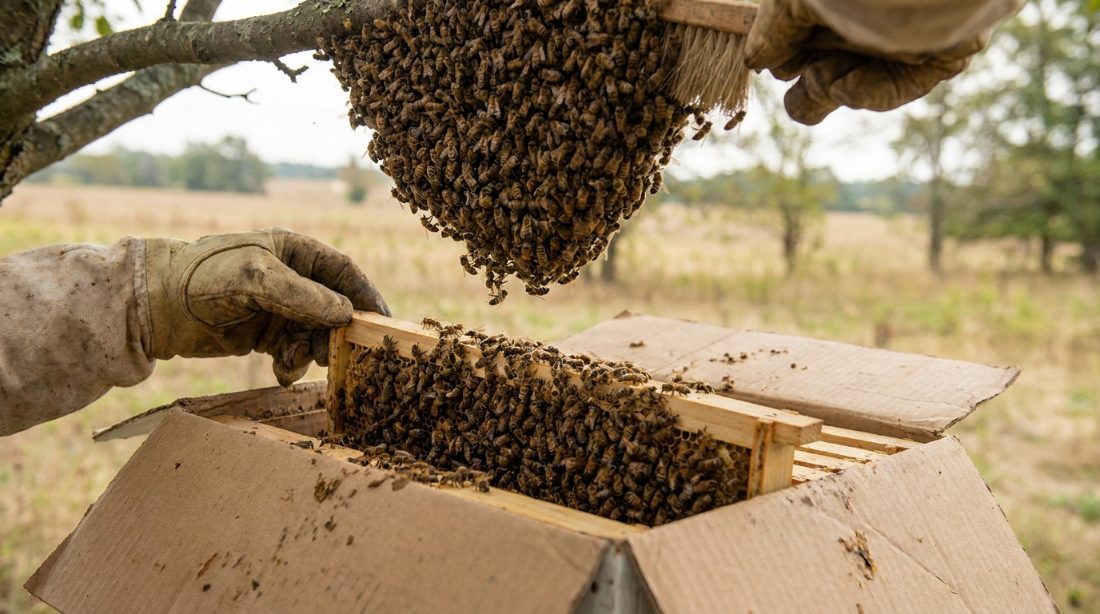
Honey Bee Swarm Removal
- Same-day or next-day swarm collection during peak season
- Live relocation to managed apiaries — no extermination
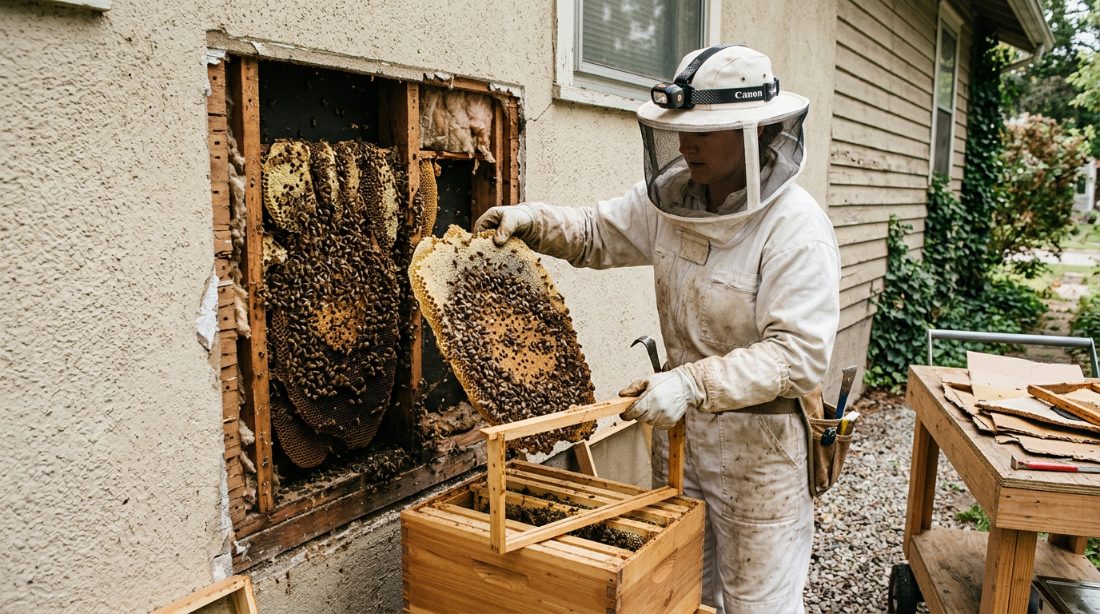
Established Hive Relocation
- Site evaluation and access assessment before commitment
- Structure opening to access hive (exterior locations)
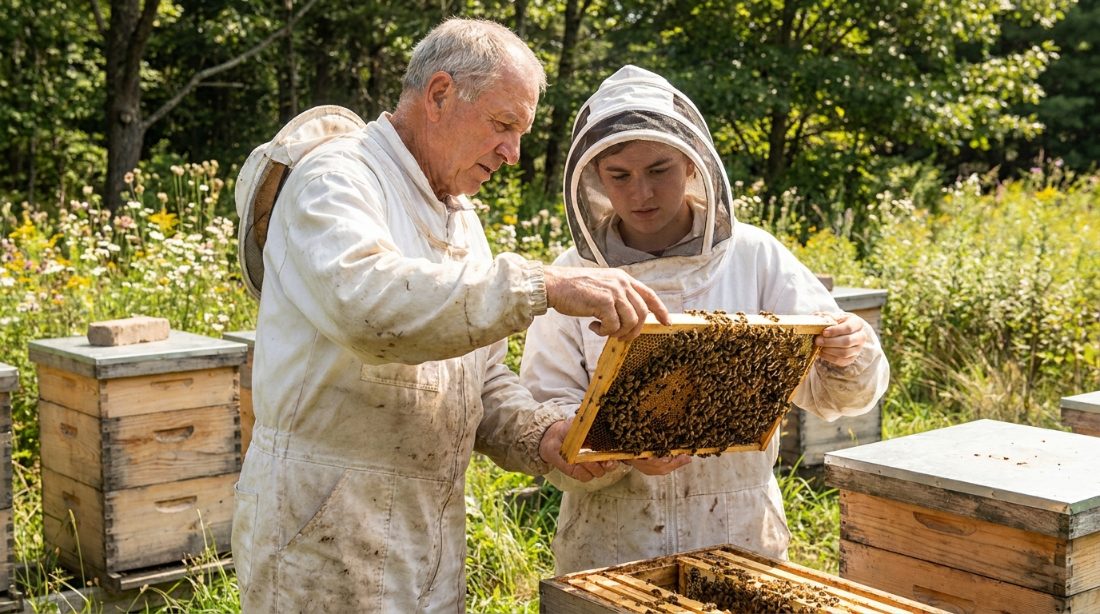
Beekeeping Mentorship
- Hives for Heroes partner — veteran & first-responder mentorship pairing (hivesforheroes.org)
- Package bee or nuc installation support
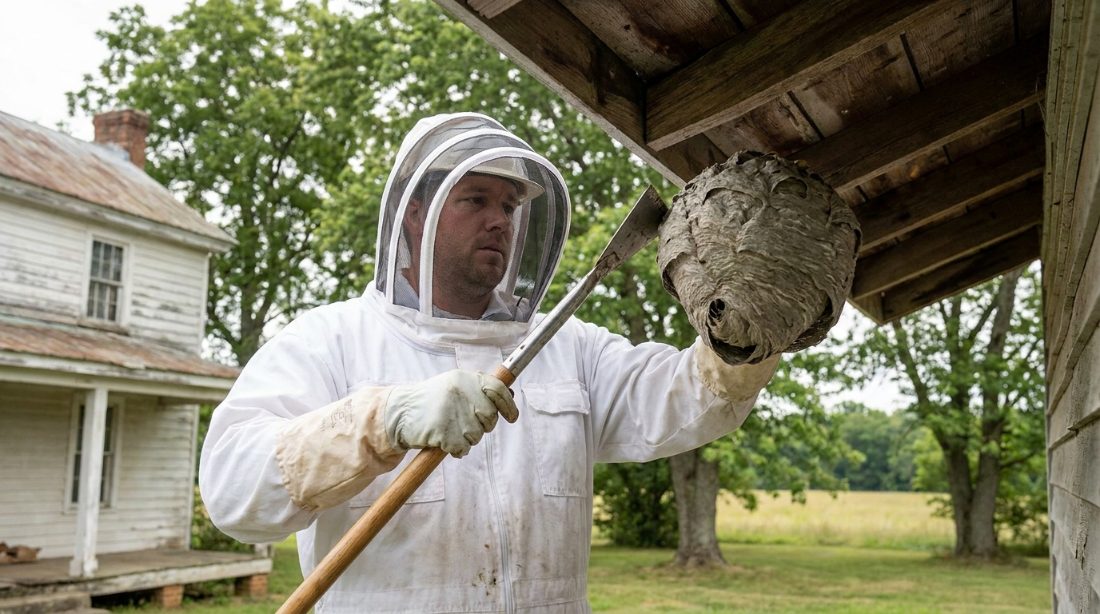
Nuisance Bee Removal
- Paper wasp, hornet, and yellow jacket nest removal
- Eaves, soffits, sheds, decks, playsets, and wall voids
How we pull a hive, start to finish.
Contact and Assessment
Call, text, or email with your location and a description of the situation. For swarms, tell us where it is (tree, fence, structure) and roughly how big.
Schedule and Site Visit
For swarms, we'll schedule a same-day or next-day visit if we're available.
Removal or Service
We arrive with the equipment we need — nuc boxes, bee vacuum, ladder, smoker, hive tool.
Relocation and Cleanup
Collected bees go to one of our apiaries or to another beekeeper who needs them.
Follow-Up
For mentorship clients, we schedule the next visit. For cut-outs, we check in a week later to make sure no bees are returning to the site.
Greater Rockingham County and Beyond
Virginia HoneyBee Extricators serves Greater Rockingham County and the surrounding region with a service radius of up to 150 miles for swarm removals, cut-outs, and hive services. We respond to calls throughout the Shenandoah Valley and…
Serving Greater Rockingham County And Surrounding Areas
Common questions, honest answers.
Do you remove bees from inside walls or attics?
We handle swarm removals — bees that just landed and haven't built comb yet. If the bees have been in your wall or attic for more than a few days and have started building, that's a cut-out and requires opening the structure to remove the comb. We evaluate cut-outs case by case across Greater Rockingham County. Some we can handle, others need a contractor involved for structural access and repair. Call us with your situation and we'll tell you what's involved.
How much does swarm removal cost?
We don't charge for straightforward swarm removals if the swarm is accessible — hanging from a branch, on a fence, on the outside of a structure. We're happy to collect the bees and relocate them to our apiary. If the swarm is in a difficult location that requires special equipment or significant time, we'll discuss costs up front. Most accessible swarms are free.
When is swarm season in Virginia?
Most swarms happen April through June, peaking in May. That's when colonies are growing fast and splitting naturally. We get occasional swarms into July, but it's rare after that. If you see a swarm, call the same day — they'll move on within 24-48 hours if not collected. We respond seven days a week during swarm season.
What's the difference between a package and a nuc?
A package is 3 lbs of bees and a caged queen with no comb — you're starting from scratch. A nuc is 5 frames of drawn comb with brood, bees, and a laying queen — it's a small established hive. Nucs build faster and have a better first-year honey crop, but they cost more than packages. We sell both each spring for pickup in late March or early April.
Can I buy honey year-round?
We sell honey as long as we have inventory, but availability depends on the season and how much we extracted. Spring honey is usually ready in May, summer honey in July or August, fall honey in September or October. Once a batch sells out, it's gone until the next extraction. Late winter and early spring we're often low or out of stock until the new season starts.
Why does raw honey crystallize?
Crystallization is normal for raw, unfiltered honey. It happens faster in honey with a higher glucose content or if it's stored in a cool place. It doesn't mean the honey is bad. Set the jar in a pot of warm water (not boiling) and it'll reliquefy. Don't microwave it — high heat destroys enzymes and changes the flavor.